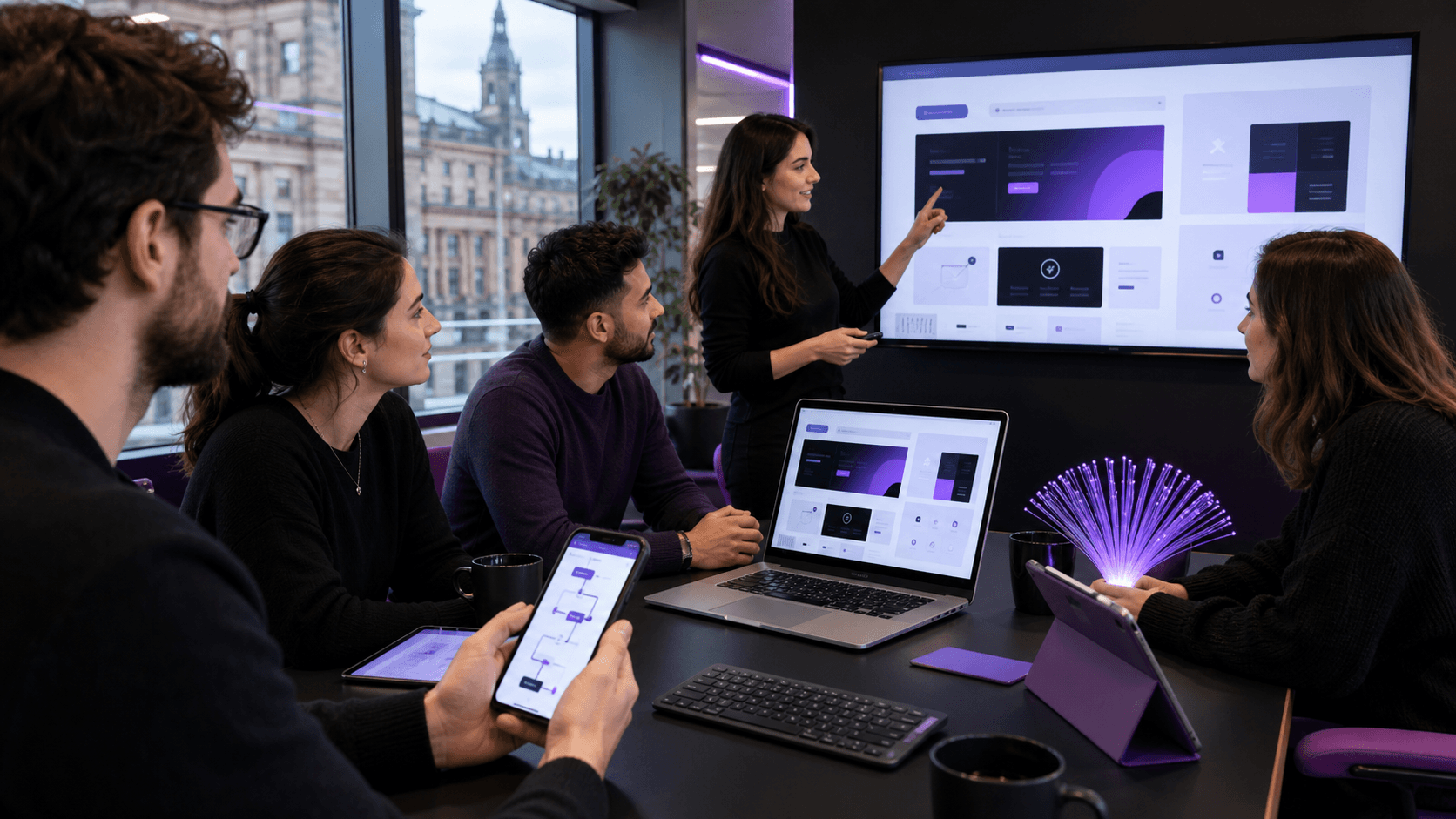
Start Small or Go All in with Your Glasgow Startup Website
Getting a startup website in Glasgow online can feel urgent. You want enquiries coming in, you want to look professional, and you do not want to lose work to the firm down the road that already shows up on Google. The big question is what to build first: a simple landing page or a full website.
Both options can work. The right choice depends on your budget, your services and how quickly you need leads. We will walk through the trade-offs on cost, speed, lead quality and long-term growth, so you can pick a plan that fits your business instead of guessing and wasting money.
What a Landing Page Really Is (and Is Not)
A landing page is one focused page with one clear goal. For a Glasgow trade or startup, that goal is usually to get someone to:
- Request a quote
- Book a visit or call
- Fill in a simple enquiry form
- Click to call you from their mobile
It is not a full website. It will not explain every single service you might offer in the future. It will not fully answer every question a careful customer might have. It is like a strong flyer, not a full brochure.
There are a few common myths worth clearing up:
- Myth: A landing page will rank on Google for everything you do
- Reality: It can rank for a small number of focused searches, but you are limited by having only one page
- Myth: A landing page is enough for years
- Reality: It is usually a short-term or testing tool, not your forever setup
- Myth: A landing page can replace proper sales information
- Reality: Some customers will still want more detail before they trust you
Landing pages work best when you are:
- Testing a new service, like EV charger fitting or garden rooms
- Validating a startup idea locally without big upfront work
- Running paid ads for seasonal work, like summer landscaping or spring boiler checks
If you only have one main offer and need something out there quickly, a landing page can do a solid job while you prove there is demand.
What a Full Website Gives Your Startup Long Term
A full startup website in Glasgow is different. It is usually made up of several pages, such as:
- Home
- Individual service pages
- Areas you cover in and around Glasgow
- About page
- FAQs
- Blog or resources
You get proper navigation so visitors can move around and find what matters to them instead of being stuck on one page. That extra depth builds trust. People can see what you do, where you work, who is behind the business and why they should believe you.
For conversions, this matters a lot. Most buyers compare options. They want:
- Proof of past work
- Reviews or testimonials
- Clear details of what is included
- Answers to basic questions before they call
A full site gives you room to show all that. It also sets you up better for SEO. By having separate pages for specific services and local areas, you can start showing up for more targeted searches, like someone looking for a startup website in Glasgow, or for particular trades in certain neighbourhoods.
Over time, adding content such as FAQs and blog posts gives you more chances to be found, keep people on your site longer and win work without paying for every click.
Landing Page Vs Full Site: Costs, Leads and Growth
When you compare the two, the trade-offs are fairly clear.
On speed and build:
- A landing page is quicker to plan, design and launch
- A full site takes longer to plan properly and structure
On leads:
- A tight landing page can convert paid traffic very well if the message and offer are focused
- A full site is better at catching organic traffic, repeat visitors and people at different stages of deciding
On growth:
- Many trades and startups launch a one-page site then hit a wall as they add services, staff or new areas
- A full site, planned with growth in mind, avoids ripping things up and rebuilding every time you expand
If you know you will grow fairly quickly, skipping three rounds of redesigns can save a lot of hassle later, even if you start reasonably small.
How to Choose for Your Startup Website in Glasgow
You can keep the choice simple.
A landing page can make sense if:
- You have one clear service or offer
- You are on a tight budget right now
- You want to test demand before going bigger
- Most of your early traffic will come from ads or direct referrals
A fuller website is usually better if:
- You already have several services or packages
- You want to rank locally and build organic traffic
- You plan to grow in the next 12 to 18 months
- Trust and reputation matter a lot to your buyers
For example, a sole trader plumber with one key service, like emergency call-outs, might start with a strong landing page linked to ads. A new salon that offers hair, nails and beauty, plus gift vouchers, usually needs a few focused pages from the start. A trades team adding maintenance contracts or recurring services will quickly benefit from proper service and area pages.
A good middle path is a small but strategic WordPress starter-site, maybe two to four pages. That gives you more than a landing page, but you still keep the build lean. Done right, it can grow into a full site later without throwing the whole thing away.
Why WordPress Beats DIY Builders for Real Businesses
For a serious startup website in Glasgow, platform choice matters. WordPress is usually a better fit than DIY page builders.
With WordPress you:
- Own your site and content, you are not just renting space on a closed platform
- Can move hosting if you need to, instead of being locked in
- Have far more freedom to add pages, forms, booking tools and SEO features
Most DIY builders look simple at first, but they can become limiting as you grow. Adding new sections, improving load speed, sorting SEO structure or connecting other tools can get tricky fast.
We know many owners worry that WordPress is too technical, or that security and updates will be a headache. That is where a good agency comes in, handling the setup, updates, backups and security, while you focus on winning and serving customers.
Seasonal Timing and a Quick First Site Checklist
Timing matters. Getting something live in late-spring or early-summer often lines up with busy periods for local services. When the weather improves and people finally tackle home jobs they have been putting off, you want to show up when they search. Even a lean, focused landing page can start catching enquiries that might otherwise go to a competitor.
Leaving it until the last minute often leads to rushed DIY sites that look unprofessional, load slowly on mobiles or miss basic local search terms. That can do more harm than good.
Whatever you choose to launch first, make sure it covers a few must haves:
- Clear headline that says what you do and where you work
- Simple explanation of your services in plain English
- Strong call to action, like call, email or form
- Mobile-friendly layout and fast loading
- Easy-to-find contact details on every page or section
To build local trust, add:
- Glasgow location cues, like areas you serve
- Real reviews or short testimonials
- Trade bodies or accreditations if you have them
- Before-and-after photos where relevant
Finally, have some basic tracking in place. Simple analytics and call or form tracking let you see:
- Which pages people land on
- What traffic sources turn into enquiries
- Whether your landing page or full site is actually working
When you can see what is happening, it is much easier to improve, whether you stay lean with a landing page or build out a full site for long-term growth.
Get Started With Your Project Today
If you are ready to turn your idea into a polished online presence, we can help you launch a professional startup website in Glasgow that fits your goals and budget. At Juggernaut Tech, we work closely with you to understand your audience, refine your message and create a site that is easy to manage and ready to grow. Share a few details about your project and we will outline clear next steps, timescales and costs. If you would like to speak with us directly, simply contact us and we will get back to you promptly.